

Notes we’d send a friend
Updates from projects we're working on and lessons we're learning.
Sent when there's actually something to say.
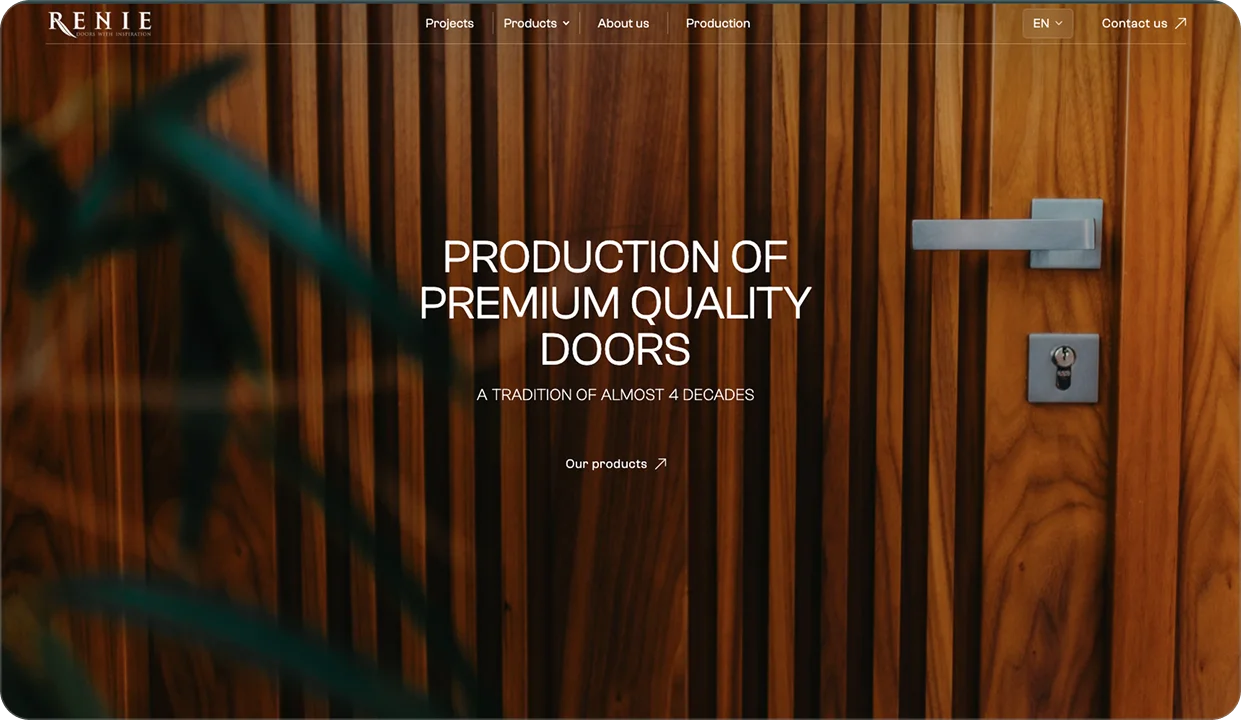
Most manufacturing websites cram everything onto one "Products" page — security doors, hotel doors, hospital doors, all mixed together. Google doesn't know what to rank, and potential clients can't find what they need. We rebuilt Renie's website with 15 focused product category pages. Three months later: Top 3 rankings for high-volume keywords, +210% organic traffic, and qualified leads finding exactly what they searched for.
Renie called us with a problem most established manufacturers have: their website was killing their business.
They've been making doors since 1990. Premium clients — Swarovski, OTP Bank, Gazprom, and even Novak Djokovic's apartment. But when someone searched "security doors Novi Sad," Renie was nowhere.
Clients were calling to complain:
A company with 35 years of history looked like it had shut down because of a bad website.
We've written about the full Renie website redesign elsewhere. This post focuses on the SEO strategy — and why 15 product category pages beat one messy "Products" page.
See the full project: Renie Website Redesign Case Study | Live Site
They had product pages — but they were a mess. Product categories weren't clear. Some door types were buried; others were duplicated. An architect looking for hotel doors had to dig through confusing menus just to see if Renie even made them.
Google couldn't figure out what Renie actually sold. Neither could potential clients.
The site was also painfully slow. PageSpeed: 3 out of 10. Images: 2-3 MB each. Load times: 10+ seconds.
We sat down with the Renie team and said, "We're starting from scratch."
The core idea was simple: one product type = one dedicated category page.
Most manufacturing sites cram everything onto one "Products" page. Security doors, hotel doors, fire-rated doors, hospital doors — all mixed together.
Google sees that and doesn't know what to rank. An architect searching "hotel doors with soundproofing" lands on a generic page and has to hunt.
We flipped that. Instead of one messy page trying to rank for 15 different keywords, we created 15 product category pages — one for each door type.
Each category page targets one specific search. Each page answers one question: "Does Renie make what I'm looking for?"
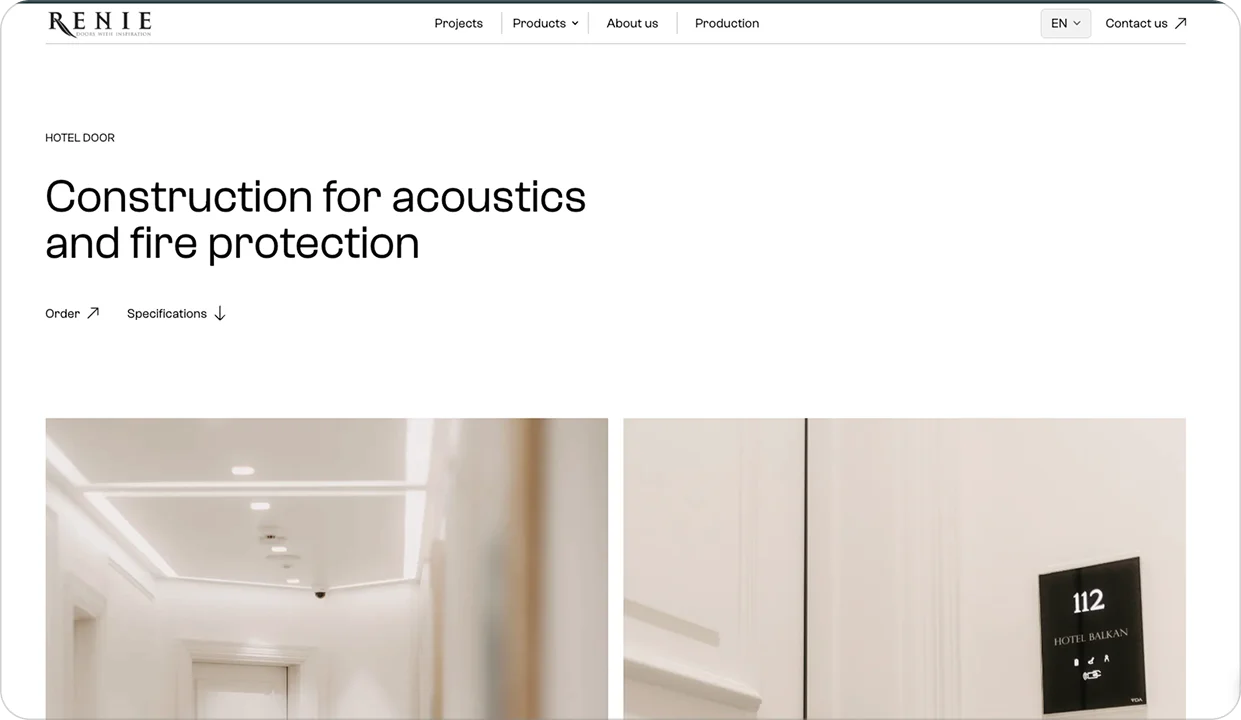
Take the Hotel Doors page. An architect searching "hotel doors with soundproofing" lands directly on a dedicated category page with soundproofing specs, fire ratings, card lock integration, real project photos, and a downloadable PDF catalog.
Before, they landed on a generic gallery where hotel doors were buried somewhere in the middle.
That's the difference between a lead and a bounce.
Once the structure was right, we fixed the details:
• Meta titles and descriptions — keyword-focused, location included. Example: "Premium Security Entry Doors for Houses | Renie Novi Sad." Google knows exactly what the page is about and where Renie operates.
• Images were killing load times — 2-3 MB photos straight from the camera. We compressed every image to 150-250 KB with zero visible quality loss. SEO-friendly file names (hotel-doors-soundproofing-renie.webp instead of IMG_0234.jpg), descriptive alt text on every image. Images are 50-80% of page weight. Cut them by 70%, and load times drop fast.
• Content that answers real questions — For each product category page, we answered what architects and contractors actually ask: What features does this door type have? What certifications apply? What customization options exist? How long does manufacturing take? If your page answers their questions, they stay. If it doesn't, they bounce to a competitor. These on-page SEO principles are what actually move rankings.
• Local SEO — Renie manufactures in Čenej (Novi Sad suburb). We optimized every page for local search: "Renie Novi Sad" in titles, natural location mentions, schema markup. When someone searches "security doors Novi Sad," Google prioritizes local businesses.
• Technical foundation — PageSpeed: 3/10 → 90+/100. Clean URLs. Mobile-responsive. Fast load times. Page speed is a direct ranking factor.
We also built an About page with company history, certifications (fire resistance, EU standards, X-ray protection), client logos (40+ brands), and an FAQ section. And a Projects page organized by country with real photos.
When an architect lands on the site, they see proof of compliance and expertise immediately. Google sees this as a trust signal. This is part of E-E-A-T — Google's framework for evaluating whether content comes from legitimate sources.
Before the redesign, Renie didn't rank for any product-specific searches because dedicated category pages didn't exist.
Three months after launch:
The real impact: An architect in Novi Sad searches "hotel doors with soundproofing." Before, Renie didn't appear. Competitors filled the first page. After, Renie's dedicated Hotel Doors category page shows up with relevant content, specs, and real projects.
That's a qualified lead who now sees Renie as an option — purely because we gave Google a clear, focused category page to rank.
If you make 10 different product types, create 10 product category pages. Google can't rank what it can't understand.
Optimize the boring details — meta titles, image file names, alt text, and page speed. They're not optional.
Answer the questions your buyers actually ask when searching. Don't just describe products.
Local SEO works for B2B manufacturing. Include your city in titles, mention your location naturally, and add schema markup.
Show proof you're legitimate. Display certifications, client logos, and real projects. When visitors engage with authentic content, Google interprets that as quality.
The difference between a website that ranks and one that doesn't isn't magic. It's structure + optimization + trust.
If your website has everything crammed on one "Products" page and you're not showing up in search results, you're leaving leads on the table.
We can help with SEO services or website redesign.
6-10 weeks depending on complexity. Renie's project took 8 weeks from discovery to launch, including 15 product category pages, full SEO optimization, and content creation.
Google needs clear signals. One page can't rank for 15 different keywords. Dedicated product category pages mean 15 ranking opportunities instead of zero.
Depends on scope, but most B2B manufacturing projects range from $5,000-$12,000. Factors include number of product categories, content creation needs, and technical complexity.
PageSpeed 3/10 means 10+ second load times. Users bounce. Google ranks you lower. PageSpeed 90/100 means 1-2 second load times. Users stay. Google ranks you higher.
Not necessarily. Renie used their existing product photos — we just compressed them properly, renamed files for SEO, and added descriptive alt text. Quality matters more than professional equipment.
Critical. Most B2B buyers search "[product] + [city]" when looking for local suppliers. If you're not optimized for local search, you're invisible to nearby prospects.
You can apply the product category page structure to an existing site, but technical issues (slow speed, poor mobile experience, confusing navigation) often require a rebuild. The ROI of fixing everything at once is usually better than incremental patches.
Not if you do it right. We set up proper redirects, preserved important metadata, and improved technical SEO. Renie's rankings improved because we fixed fundamental structure problems.
Updates from projects we're working on and lessons we're learning.
Sent when there's actually something to say.