Notes we’d send a friend
Updates from projects we're working on and lessons we're learning.
Sent when there's actually something to say.
←
Go back
Your email list is full of people who've already shown interest. They signed up, made a purchase, left their details. The question is what you're doing with that. Sending a newsletter whenever someone remembers isn't a system. Structured email delivers the right message at the right time, and that's where it becomes useful.
The work starts with understanding your audience and where they are in their journey. Before any emails go out, we map out who you're talking to, what they need to hear, and when. That includes both one-off campaigns and automated flows that run in the background.
From there, we handle the messaging, design, and structure. You'll see what's going out before it sends, and there's a clear process for feedback and approvals. Some emails are planned around launches or announcements. Others trigger automatically based on actions people take - signing up, purchasing, abandoning a cart, going inactive.
Email also doesn't work in isolation. It connects to your website, your forms, your CRM. We make sure everything talks to each other so the right data flows through and emails actually land where they should. Over time, we review what's working and adjust the approach based on what the numbers show.
If you're collecting emails but not doing much with them, there's value sitting untouched. This is for businesses that have leads, customers, or users and want to actually use that list instead of letting it gather dust.
It's also for teams that need better follow-up. Onboarding new customers, nurturing leads who aren't ready to buy yet, staying in touch after a purchase. If those things are happening inconsistently or not at all, email gives you a way to fix that.
And it's for businesses launching something new where communication needs to be planned and timed. A new service, a product, an offer. Email works because people on your list already asked to hear from you. When the message is relevant, it doesn't feel like noise.
Email fits into the customer lifecycle in a way other channels can’t. It reaches people after they’ve signed up, after they’ve purchased, after they’ve gone quiet.
There’s a difference between sending emails manually and having a system that runs on its own. Campaigns work for announcements and launches. Automated flows handle the rest. Once set up, they keep working.
What makes email effective isn’t frequency. It’s whether the timing and message match where someone is.
Email marketing covers everything from strategy to automation to ongoing optimization. The scope depends on your list size, how many flows you need, and what you're trying to achieve. Most engagements include planning, content creation, automation setup, and performance tracking. Everything works together as a system.
This is where we define who you're talking to and when.
This is what actually gets sent.
This is what runs in the background without manual work.
This is how email connects to everything else.
This is how we improve over time.
Email marketing can be project based or ongoing. Setting up automations is typically a one time effort, while campaigns and optimization continue month to month. Some businesses need a full system built from scratch. Others already have the foundation.
Email engagements start at €1,500, whether that’s a setup project or monthly management. Pricing depends on the size of your list, the complexity of your flows, and how much content is involved.
If you want to see how different components affect the investment, the estimator can map it out.

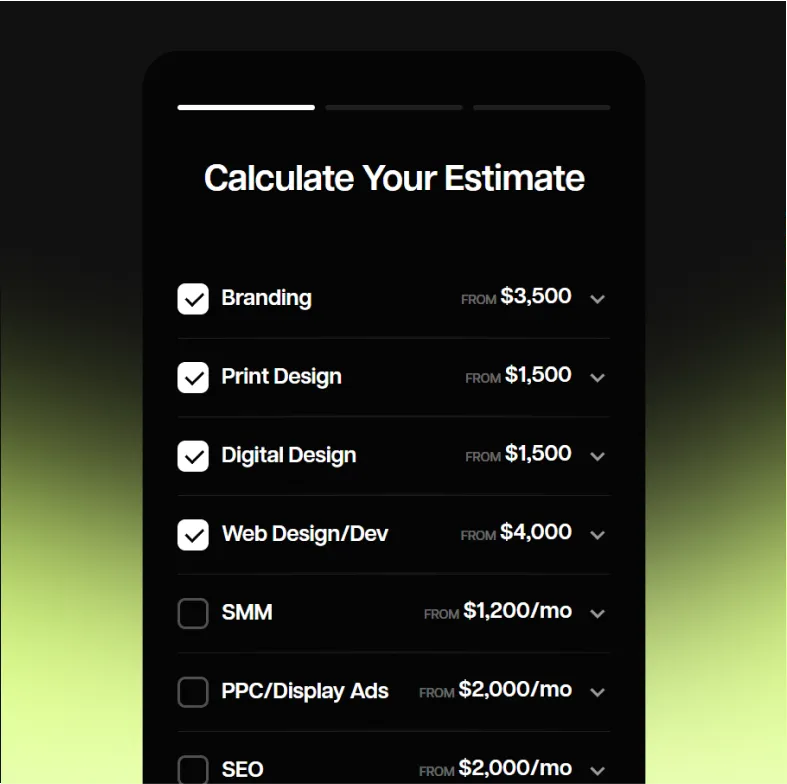
Step 1
Use our quick calculator to get an instant ballpark price for your project.
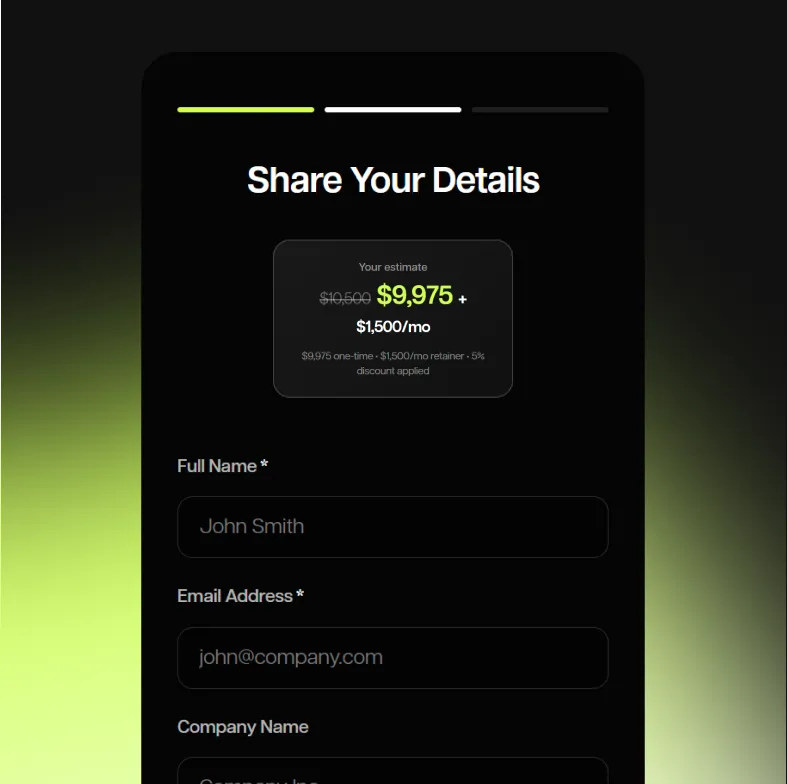
Step 2
Tell us about your goals, timeline, and any specifics we should know.
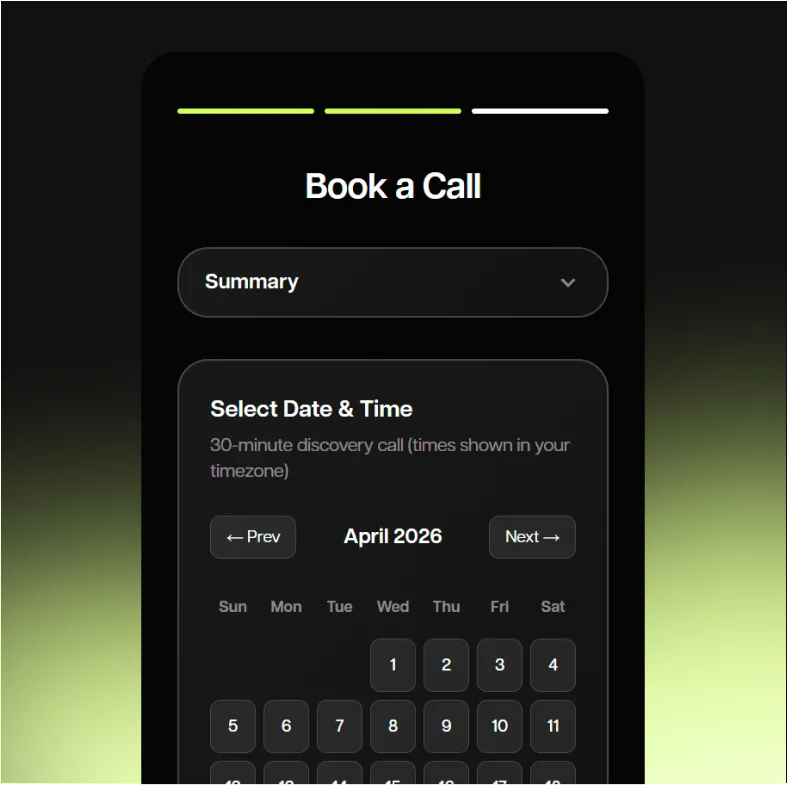
Step 3
Pick a time that works for you - we'll finalize the scope and kick things off.
List size matters less than list quality. A small list of people who actually want to hear from you will outperform a large one full of disengaged contacts. If your list is growing and the people on it are relevant, it's worth building the system now so it scales with you.
Not if the system is set up properly. Deliverability depends on things like authentication, list hygiene, and sending patterns. We make sure everything is configured correctly from the start, and we only send to people who've opted in. That's what keeps you out of spam folders.
Campaigns are one-time sends, like a product launch or a seasonal promotion. Flows are automated sequences triggered by actions, like signing up, making a purchase, or going inactive. Most email programs need both.
There's no universal answer. It depends on your audience and what you're sending. Once a week works for some businesses. Once a month is fine for others. What matters more is consistency and relevance. We figure out the right rhythm during strategy.
Yes. Copywriting is part of the service. We write the subject lines, body copy, and calls to action. You review and approve before anything goes out.
Automated flows can start working as soon as they're live. Campaigns depend on timing and list engagement. Most businesses see measurable results within the first few months once everything is in place and running consistently.
We can audit what's there and figure out what's broken. Sometimes it's the strategy, sometimes it's the execution, sometimes it's the list itself. From there we either fix what exists or rebuild what needs replacing.
Yes. Nothing sends without your sign-off. You'll see the content, subject lines, and timing before anything goes live. There's a built-in review process so you stay in control without having to manage the day-to-day.
Updates from projects we're working on and lessons we're learning.
Sent when there's actually something to say.