Notes we’d send a friend
Updates from projects we're working on and lessons we're learning.
Sent when there's actually something to say.
←
Go back
Paid advertising puts your offer in front of people actively searching for it. The targeting is precise, the results are measurable, and you control the budget. When the ads connect with the right audience, the traffic converts. That's the difference between paying for attention and paying for results.
The work starts with understanding your business, your margins, and what you're trying to achieve. We look at your offer, your audience, and what success actually looks like for you. This shapes the targeting, the messaging, and how much you should be spending to make the numbers work.
Once the strategy is clear, we build and launch the campaigns. Targeting gets refined, ads get tested, and performance gets tracked from day one. Nothing runs on autopilot. Campaigns are monitored, adjusted, and optimized based on what the data shows. If something works, we scale it. If it doesn't, we change it.
Performance gets reviewed regularly. You'll see what's being spent, what's working, and what's next. Decisions are based on data, not assumptions. Paid ads aren't "set and forget." They require ongoing testing, refinement, and adjustment to stay profitable as competition and costs shift.
If you need traffic today instead of waiting six months for SEO to kick in, paid advertising is the move. Launching a product? Testing an offer? Trying to hit a revenue target this quarter? Paid ads get you in front of people immediately. They also give you control—you decide who sees your message, when they see it, and how much you're willing to spend for it.
But it's not magic. Every click costs money, and not every click converts. Your margins need to support the cost, your offer needs to be clear, and the campaigns need time to figure out what works. If you're expecting instant profitability or you're trying to run this on a tight budget with no room to test, you're going to be frustrated. Paid traffic requires both money and patience to optimize.
What you get is speed and predictability. Once the campaigns are optimized and the numbers make sense, you can scale them. You can't do that with organic traffic. Paid ads won't replace SEO or content, but they're the fastest way to test whether people actually want what you're selling and start generating revenue while everything else builds.
When someone searches for what you offer, your ad can show up at the top. When someone fits the profile of your ideal customer, your ad can appear in their feed. Get in front of people at the moment they have intent.
Getting the click is only half the job. What happens after matters just as much. If your ad says one thing and your landing page says something else, people bounce. If the page loads slowly or the offer isn’t obvious, they leave.
What makes paid ads work long term is testing. You test who you’re targeting, what you’re saying, what you’re offering, and where you’re sending people. The campaigns that perform get more budget. The ones that don’t get adjusted or shut down.
A PPC engagement covers everything from strategy to ongoing optimization. The exact scope depends on your goals and how many platforms you're running on, but most projects include planning and setup, campaign execution, landing page alignment, and continuous optimization. Everything is managed as a system, not a set of disconnected tasks.
This is where we define what you're trying to achieve and how to get there.
This is the actual build and management of your ad campaigns.
This ensures what happens after the click actually leads somewhere.
This is how campaigns get better over time and grow when they're working.
This is how you know what's happening and what's next.
PPC is a recurring management service. The campaigns need continuous monitoring, testing, and optimization to stay profitable. The management fee covers strategy, execution, and ongoing refinement. Ad spend is separate and paid directly to the platforms.
PPC engagements start at €2,000 per month for management. The final amount depends on how many platforms you’re running on, how many campaigns are active, and how much testing is involved. Ad spend is on top of that and depends entirely on your goals and margins.
If you want to see how scope affects the management fee, the estimator can map it out.

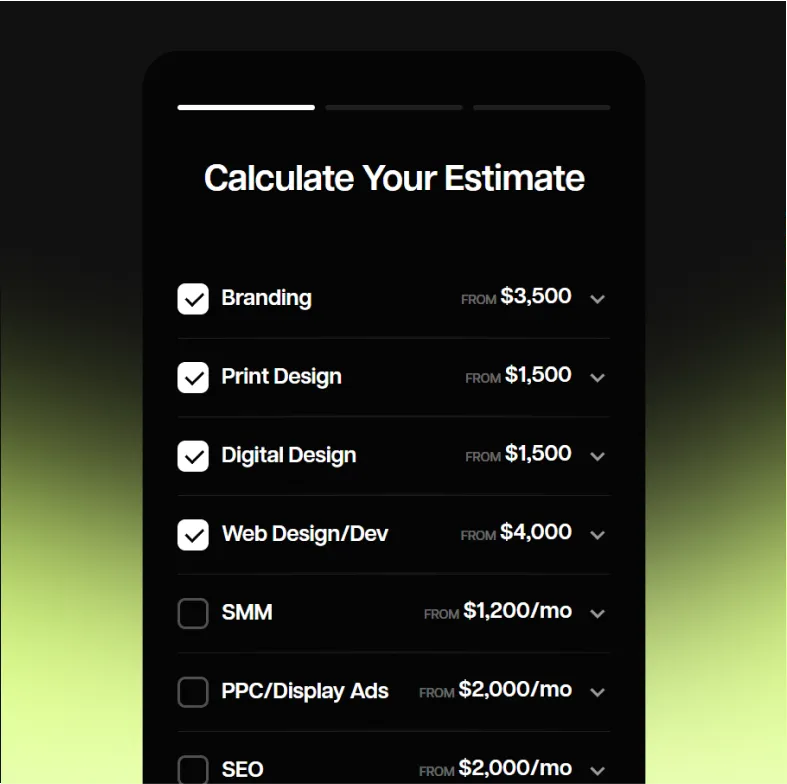
Step 1
Use our quick calculator to get an instant ballpark price for your project.
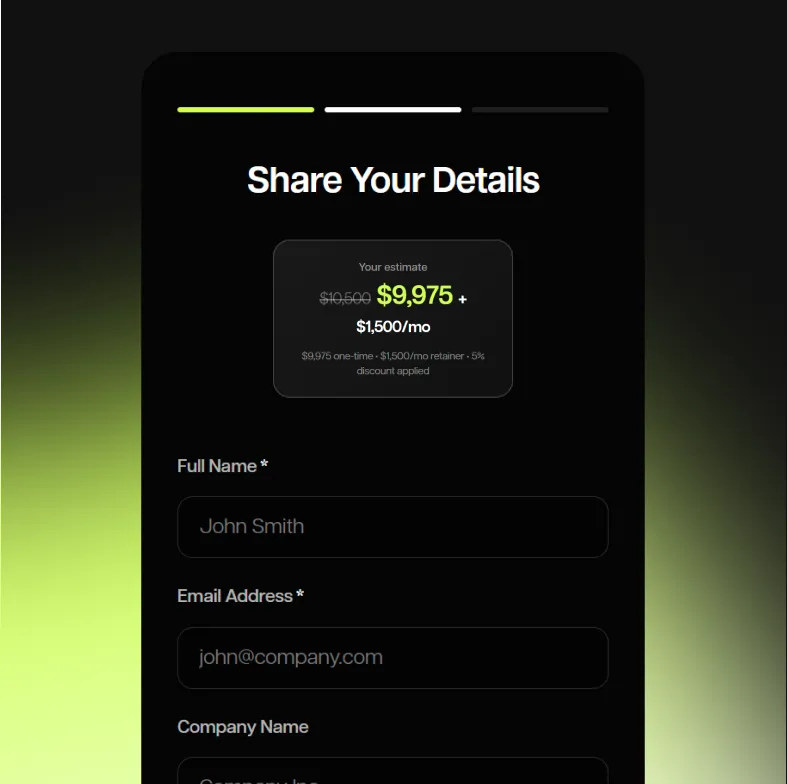
Step 2
Tell us about your goals, timeline, and any specifics we should know.
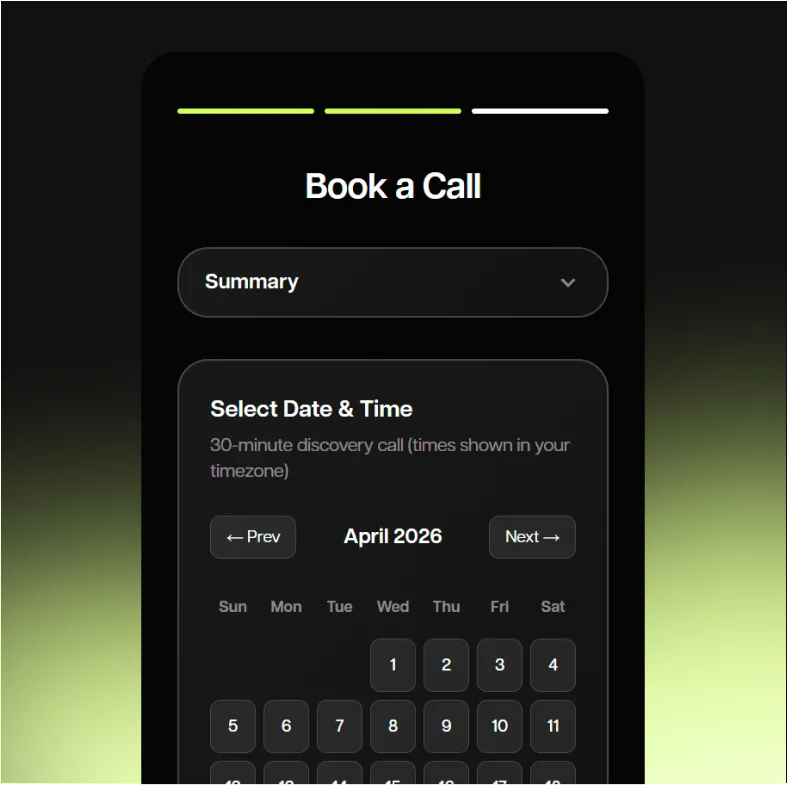
Step 3
Pick a time that works for you - we'll finalize the scope and kick things off.
You can start getting traffic the same day the campaigns go live. But traffic isn't the same as results. The first few weeks are about gathering data—figuring out which audiences respond, which ads work, and what needs to change. Meaningful performance usually starts to stabilize after 4-6 weeks of testing and optimization.
More budget means more data, faster learning, and more room to test. But throwing money at bad campaigns doesn't fix them. The goal is to find what works at a smaller scale, then scale it. If your budget is tight, we focus on fewer campaigns and tighter targeting until the numbers work.
The management fee covers strategy, setup, optimization, and reporting. Ad spend is what you pay directly to the platforms for the actual ads. They're completely separate. You control the ad spend, and it goes straight to the platforms—not through us.
Yes. PPC doesn't depend on SEO to function. But they work better together. SEO builds long-term visibility while PPC drives immediate traffic. If your site is optimized for search, your landing pages are usually better, and your paid campaigns benefit from that. They're not either/or—they're different tools for different timelines.
Traffic stops. Unlike SEO, paid ads don't have residual effects. The moment you turn them off, the clicks stop coming. If you need to pause for a period, the campaigns can be restarted, but expect a short ramp-up period while the algorithms re-learn what works.
We track everything - clicks, conversions, cost per acquisition, return on ad spend. You'll get regular reports showing where the money is going and what it's producing. If something isn't working, we adjust. If something is, we scale it. The data tells us what to do next.
Yes. The accounts are yours. We manage them, but you have full access and ownership. If you ever decide to move on, you keep everything—the accounts, the data, the history.
There's no universal number. It depends on your industry, your margins, and how aggressive you want to be. We'll help you figure out a starting point based on your goals and what the data shows. From there, the budget can scale up or down depending on performance. The right amount is whatever produces profitable results—not a fixed figure.
Updates from projects we're working on and lessons we're learning.
Sent when there's actually something to say.