


Notes we’d send a friend
Updates from projects we're working on and lessons we're learning.
Sent when there's actually something to say.
Nearly four decades of work across 20 countries, and their website didn't reflect any of it. Renie manufactures premium doors for hotels, hospitals, luxury residences, and everything in between. What they didn't have was a website that knew any of that.

Full website rebuild

product categories organized

The old site was a WordPress template they'd bought at some point and never really dealt with. When we dug into it, we found fake team members indexed under their domain, dummy testimonials, portfolio categories for flooring and interior design. None of it was Renie. It was the template's placeholder content, sitting there untouched for years while their actual clients were bringing it up in conversations.
The old site scored 3 out of 10 on PageSpeed. The product categories that existed were pulled from the template, not from how Renie actually sells. We rebuilt the catalog around 15 real product types, gave each one its own page and copy, and structured it around how people actually search. An architect specifying fire-rated doors lands on a page built for that, not a generic list.
Renie's client list includes Swarovski, OTP Bank across eight Serbian branches, Gazprom's executive office in Novi Sad, and a Novak Djokovic apartment in Belgrade. The website before this one didn't reflect any of that. We built something that does. Clean, fast, and structured around the way their clients actually come looking for them, whether that's by product type, by project, or by industry.

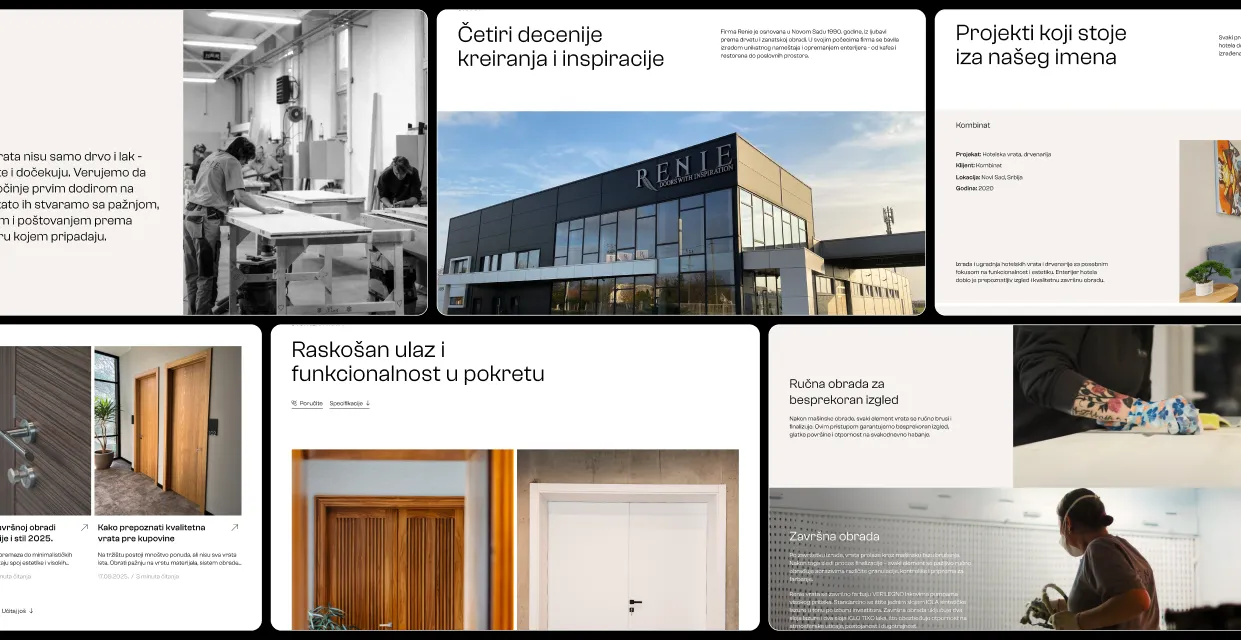
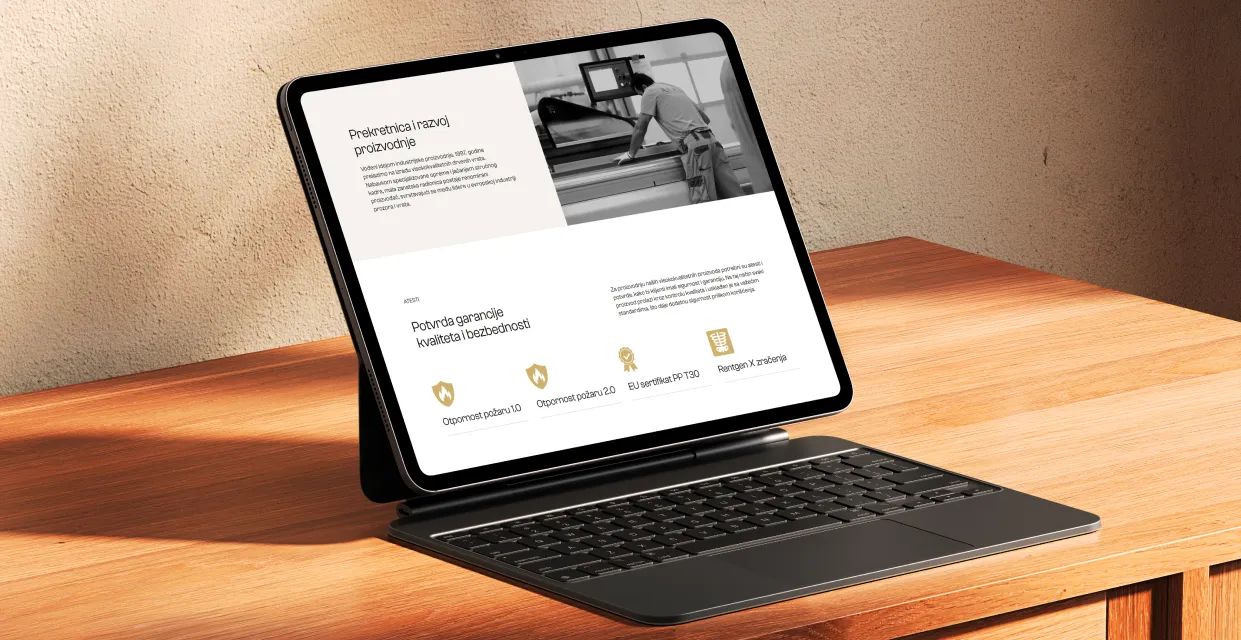
Most keywords were sitting between position 23 and 102. "Staklena vrata" had slipped from 7th to 13th while the old site sat unchanged. No meta descriptions on any page, images named things like "sgv.png" with no alt tags anywhere. The mobile version loaded slowly enough to hurt rankings on its own.
We went through the whole thing. Every ghost page, the fake team members, the dummy testimonials, the flooring and interior design categories that had nothing to do with Renie, removed. Meta titles and descriptions written for every page. Images properly named and tagged with descriptive alt text. The new build came without the weight of an unmaintained WordPress theme carrying years of unused template code, so the performance problems that existed before had nothing left to live in.




Renie now has a website that reflects nearly four decades of work. The fake pages are gone. The catalog makes sense. The pages that need to rank have the technical foundation to do it. Any partner who looks them up finds a product catalog built around how they actually sell, and a project list that shows where they've actually worked.
It depends on the scope. A marketing site with a well-structured product catalog, proper SEO foundations, and all the copy written for you starts at around $5,000. Larger projects with more pages, custom functionality, or complex content structures cost more. You can use our calculator on the Get Started page to build your own estimate, and we'll confirm the final number after a discovery call.
For a project like Renie's, where we rebuilt the full catalog, wrote all the copy, and handled SEO alongside design and development, the process took around 6 to 10 weeks. Timeline depends on how much content needs to be created or restructured, and how quickly feedback moves on your end.
It can, if it's done carelessly. Moving platforms without proper redirects, losing indexed pages, or stripping out content that was ranking can all damage your visibility. We handle this as part of the build: every page gets proper titles and descriptions, URLs are structured cleanly, and nothing gets dropped without a reason.
WordPress can work well when it's maintained properly, but a neglected WordPress site accumulates problems fast: outdated plugins, leftover template content, slow load times. Depending on your needs, we either rebuild within WordPress with a clean setup, or migrate to a platform better suited to how you actually use the site. Renie moved to Webflow, which gave them a faster, cleaner build without the ongoing maintenance overhead.
We handle it. For Renie, we wrote all the copy across 15 product categories, the about section, and all supporting pages. If you have existing content that works, we use it. If not, we start from scratch based on what we learn about your business.
A few things to look for: keywords you should rank for sitting on page three or beyond, people dropping off before they find what they need, clients or partners mentioning the site directly, and load times that make you cringe on mobile. Renie's clients were bringing it up in meetings. That's usually a clear sign.
Sometimes a focused fix is enough, but it depends on what's causing the problem. If the issues are structural, like a product catalog that doesn't reflect how you actually sell, or technical debt built up from years of an unmaintained template, a partial update usually just delays the full rebuild. We'll tell you honestly after a discovery call what makes more sense for your situation.
This is something we do as part of the project. For Renie, we restructured 15 product categories from scratch, each with its own page, copy, and logic built around how their different buyers actually search. A hotel developer looking for acoustic doors needs a different page than a hospital specifying X-ray rooms. Getting that structure right is usually where the most important work happens.
Updates from projects we're working on and lessons we're learning.
Sent when there's actually something to say.