
Notes we’d send a friend
Updates from projects we're working on and lessons we're learning.
Sent when there's actually something to say.
Xenios won UN recognition while their brand looked like three different startups. We built a parent-child identity system - one neural logomark that scales across Global, Academy, and LMS, with distinct positioning per division and a visual language rooted in neuroscience instead of generic tech aesthetics.

sub-brands aligned

pages of brand discipline
Client:
Xenios
Location:
Abu Dhabi, UAE
Industry:
EdTech / Neuroscience
Involment:
2025
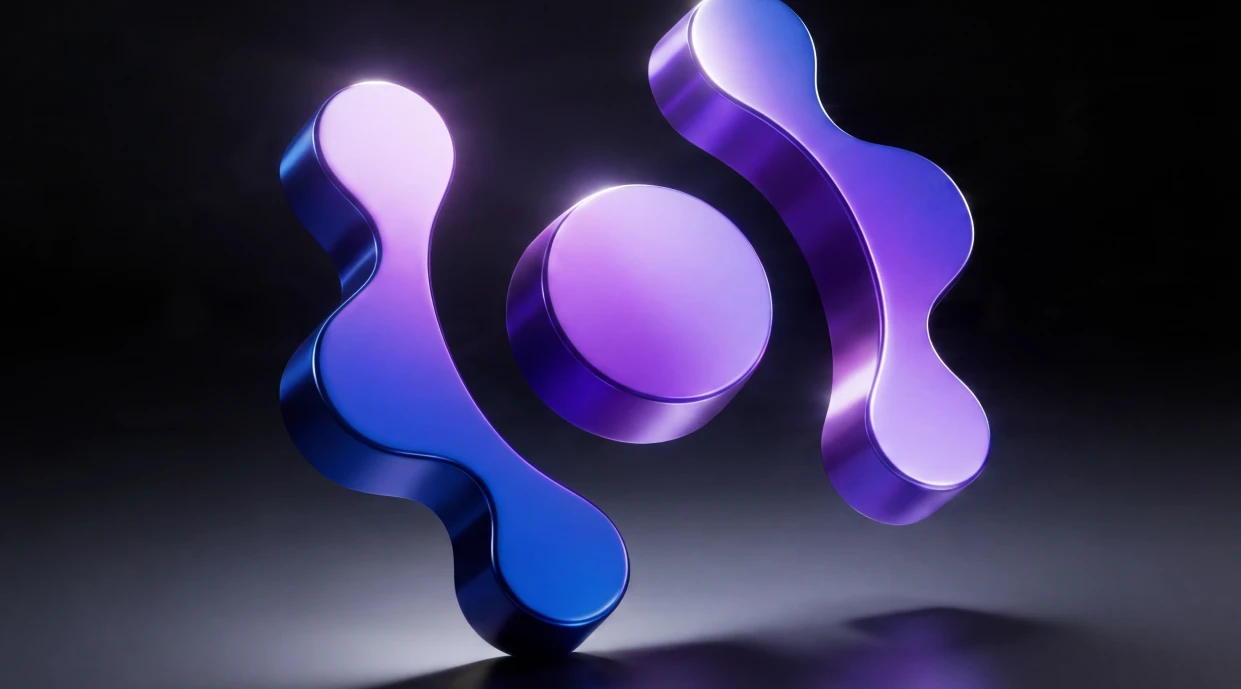
Xenios Academy was running three businesses under one name: the parent company winning awards, an educational workshop division, and a neuroscience-based learning platform shipping on app stores. One brand trying to speak to investors, educators, and app users simultaneously.
The problem wasn't execution. The problem was strategic. Prospects couldn't figure out what Xenios actually sold. Investors didn't know if they were funding software or consulting. Enterprise clients landed on workshop content when they needed platform specs. The brand wasn't broken - the architecture didn't exist.
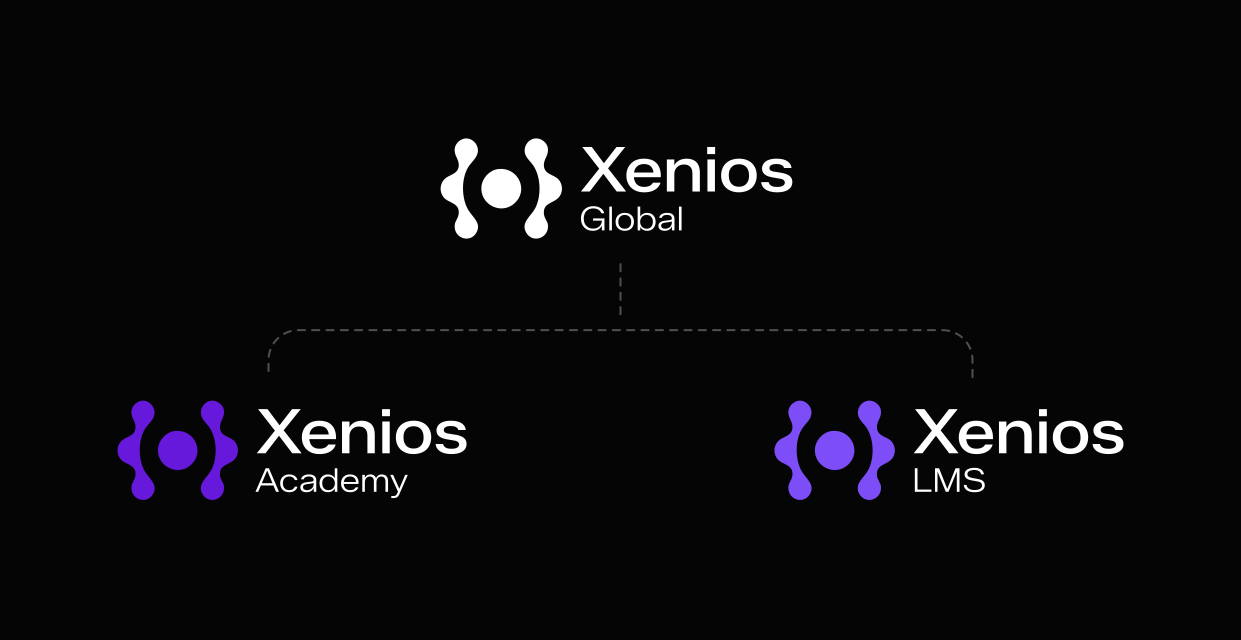
We created a three-tier brand system from scratch:
Xenios Global - The parent company:
Xenios Academy - The educational division:
Xenios LMS - The product platform:
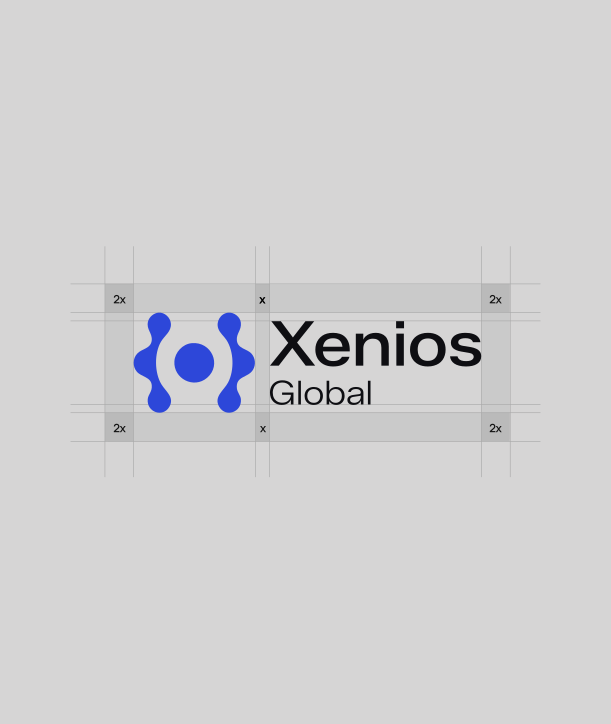
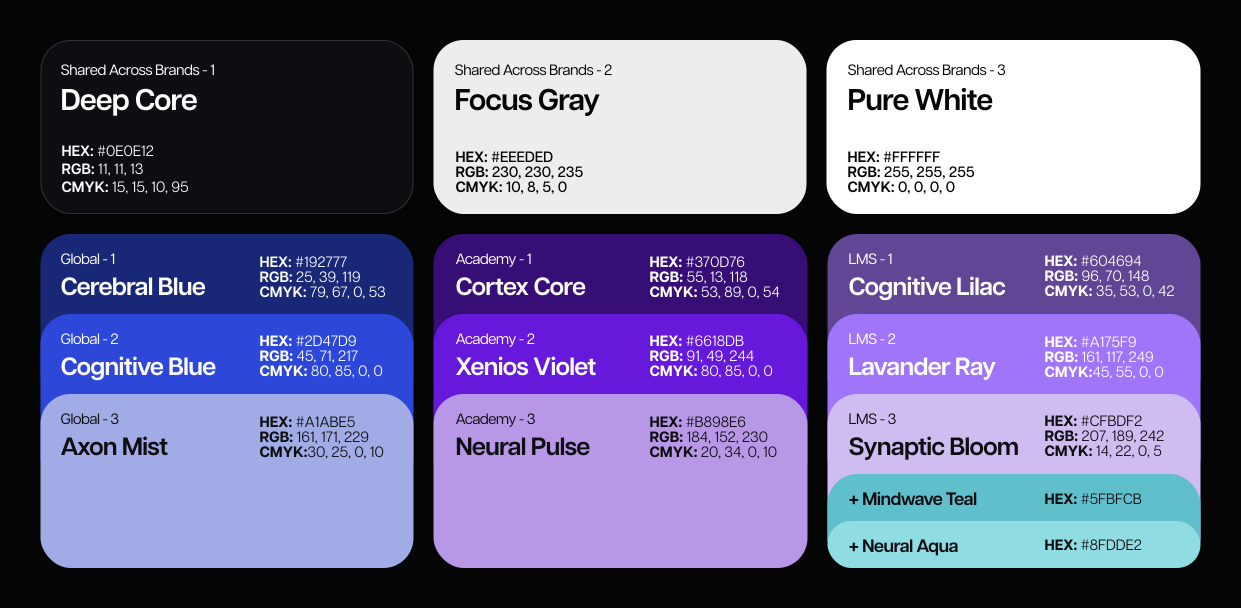
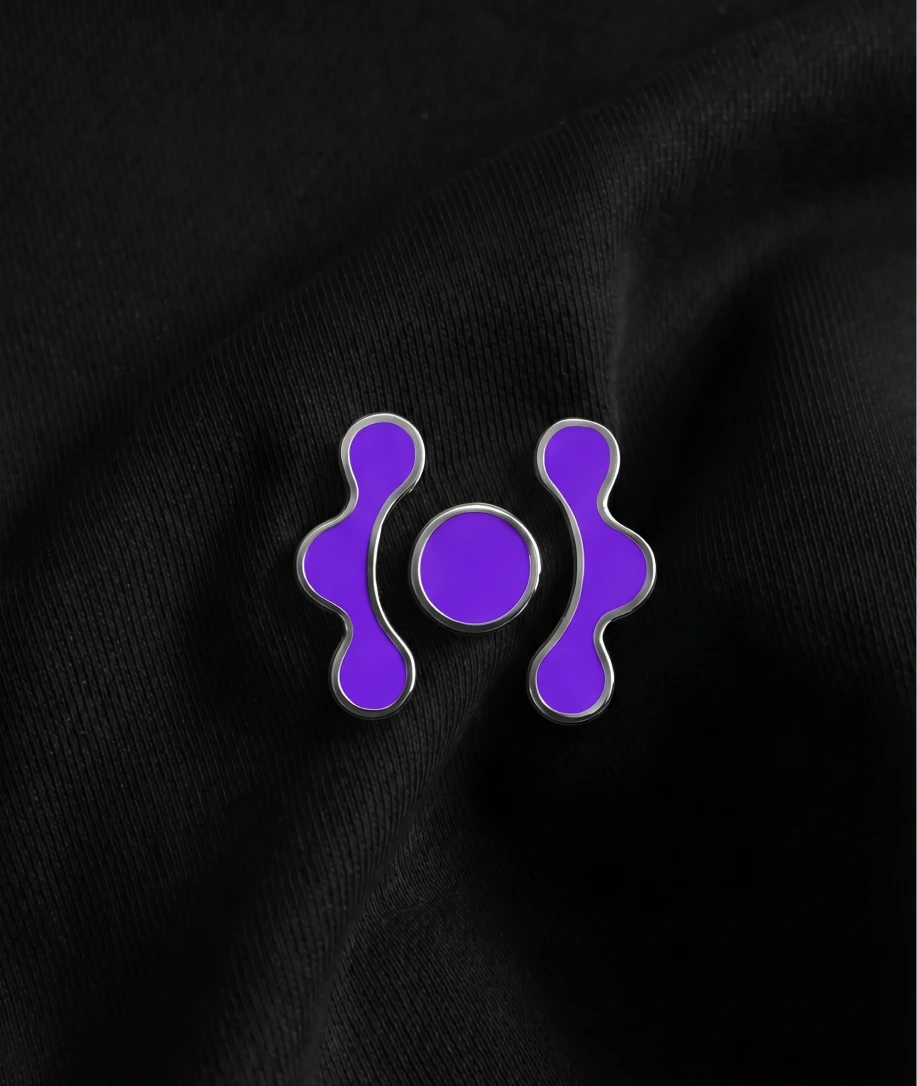
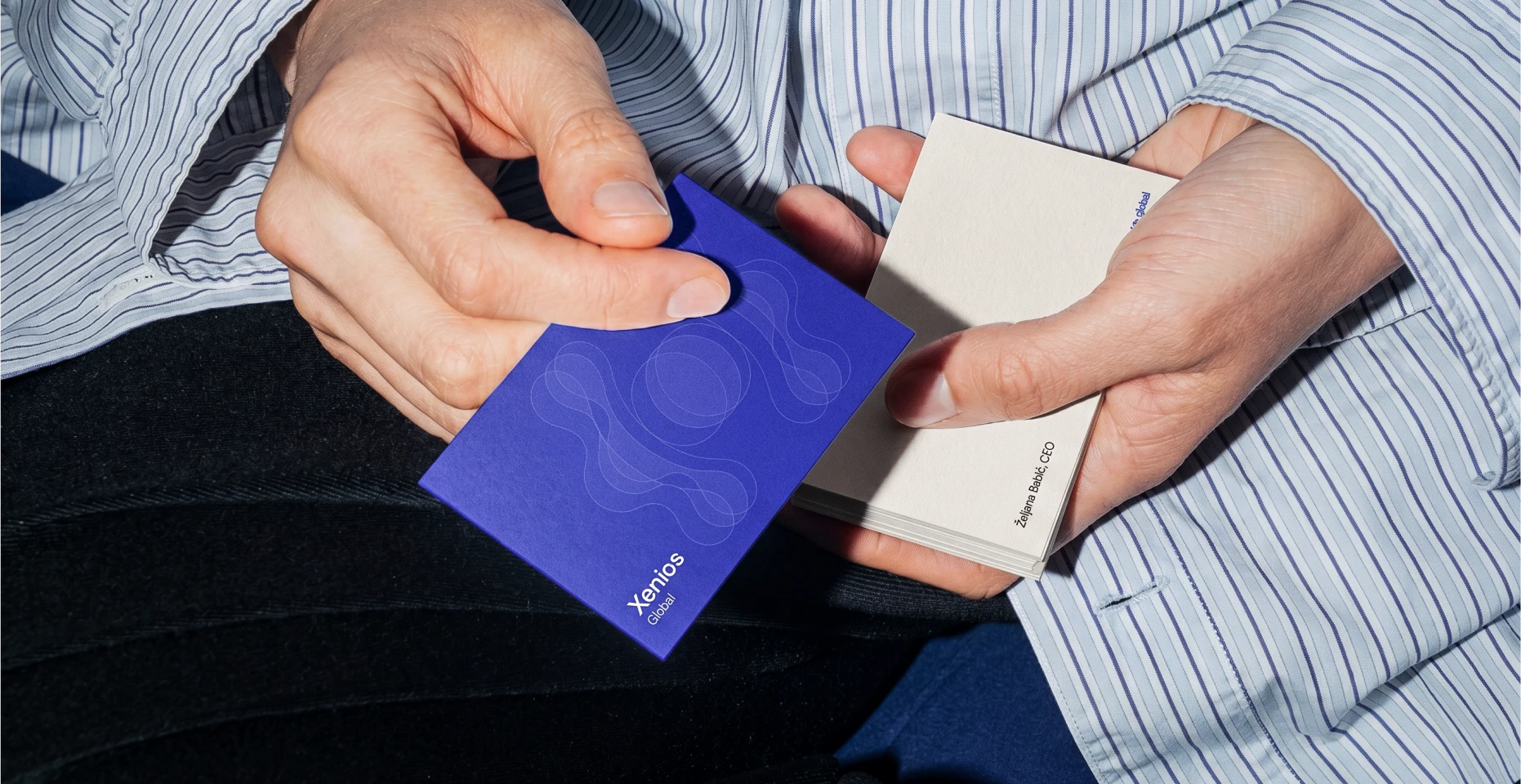
All three share one neural logomark that symbolizes their scientific foundation. After delivering the system, we moved into ongoing execution: social content, investor pitch decks, event marketing, photoshoots, and UI updates across all three brands.

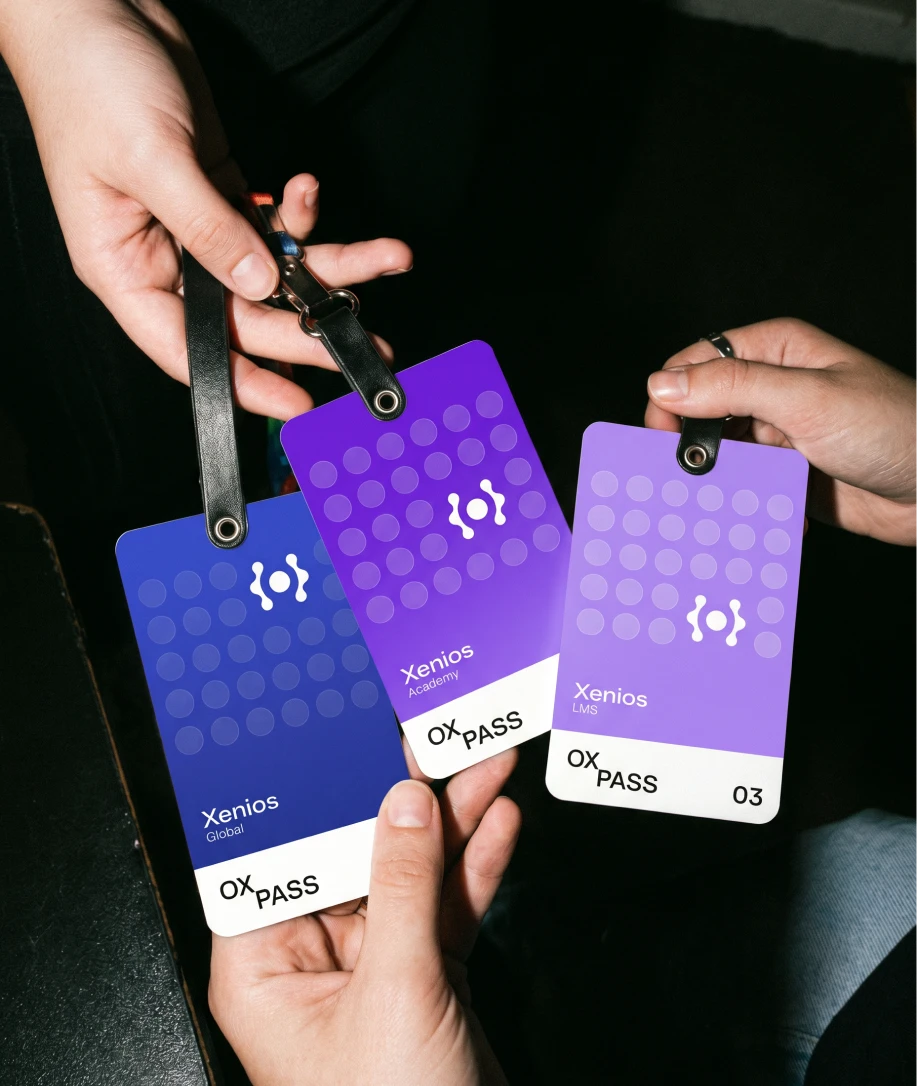
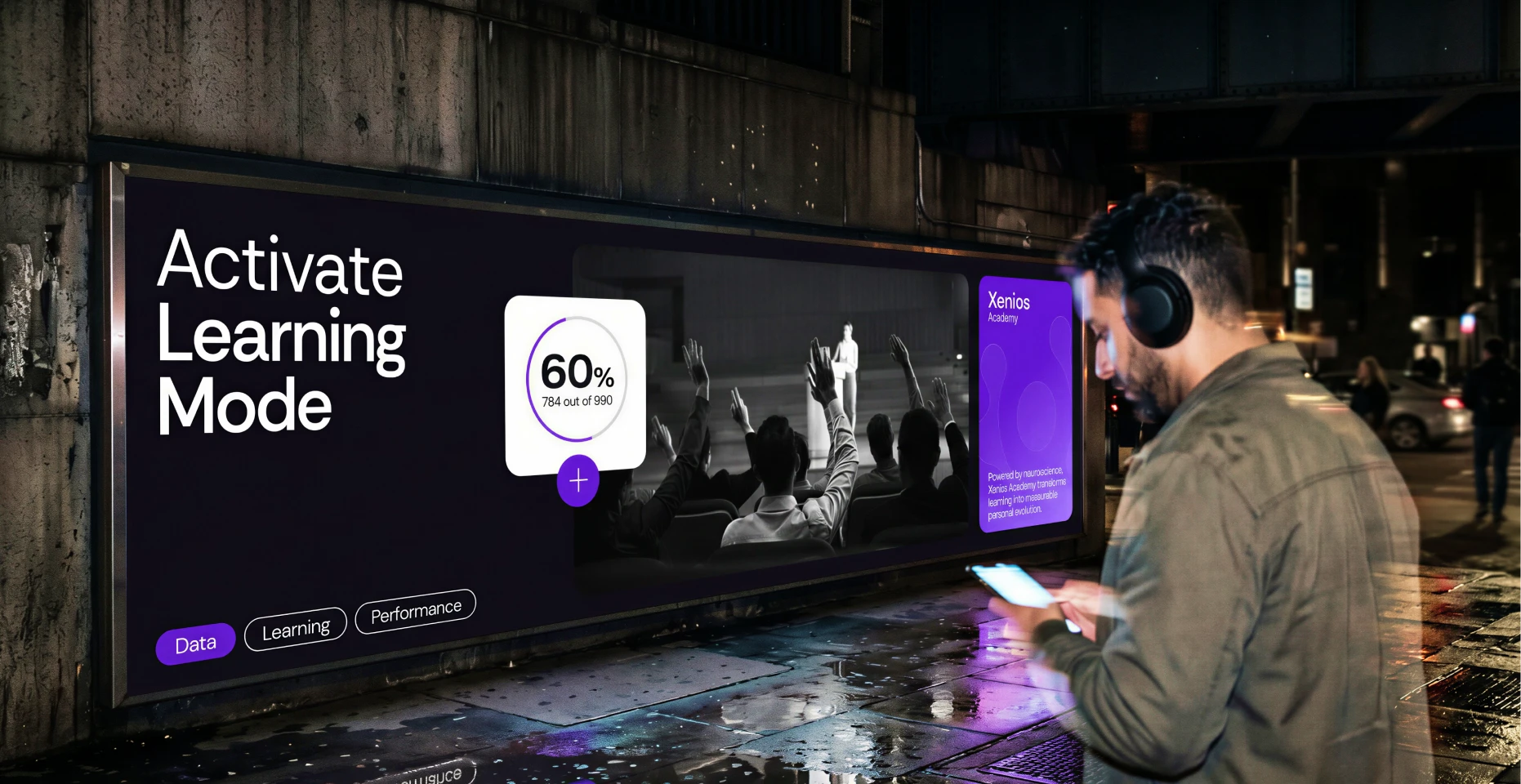

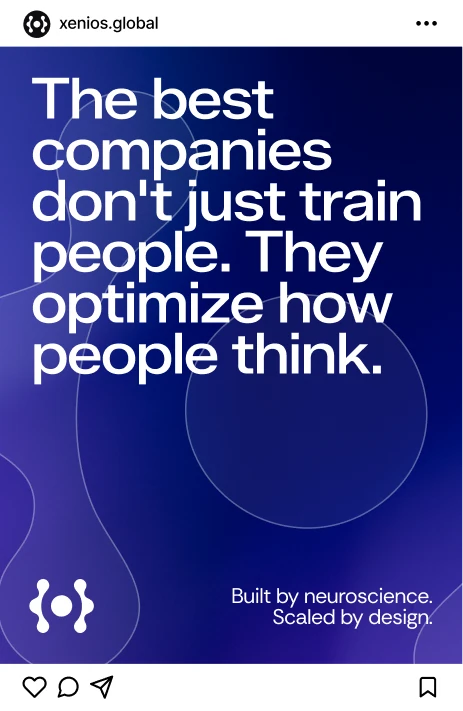
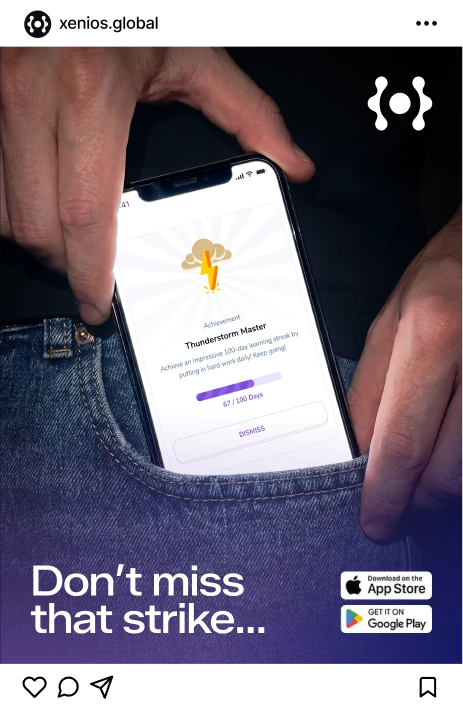

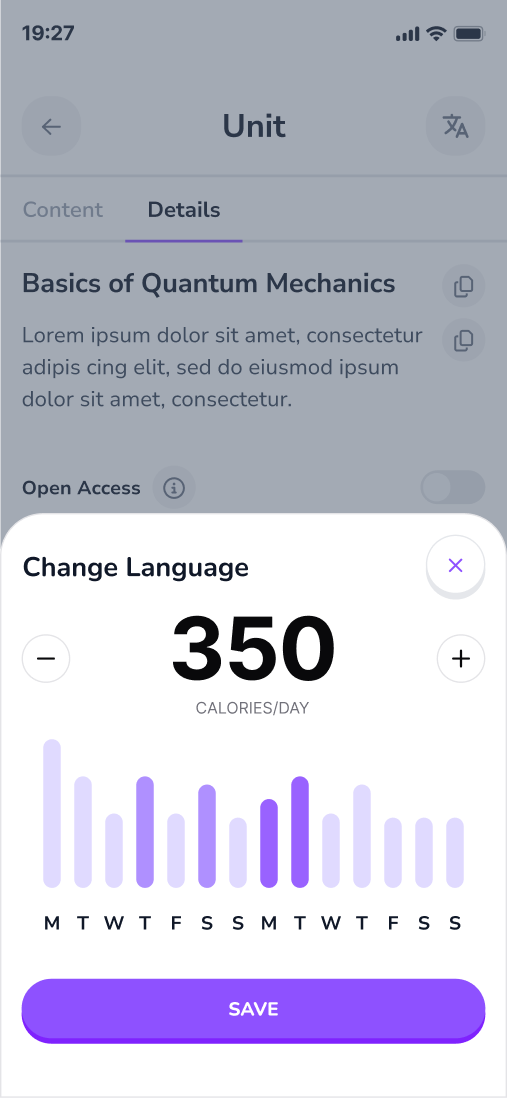
The Xenios LMS mobile app was developed by Nine Pixels and Xenios's internal team. We provided the brand architecture, visual identity system, and comprehensive guidelines—they handled the technical build and UI implementation.
Learning Lavender became the primary accent color throughout the app. The neural logomark adapted cleanly to app icon format. Typography, spacing, and color tokens from our system translated directly into their component library. The result: an app that feels consumer-friendly and mobile-native while staying connected to the broader Xenios ecosystem.



Xenios now operates as a credible multi-division company instead of a confusing single brand. Investors see a parent company with diversified revenue streams. Educators find workshop programs without wading through product specs. App users discover a consumer platform that doesn't feel like enterprise software.
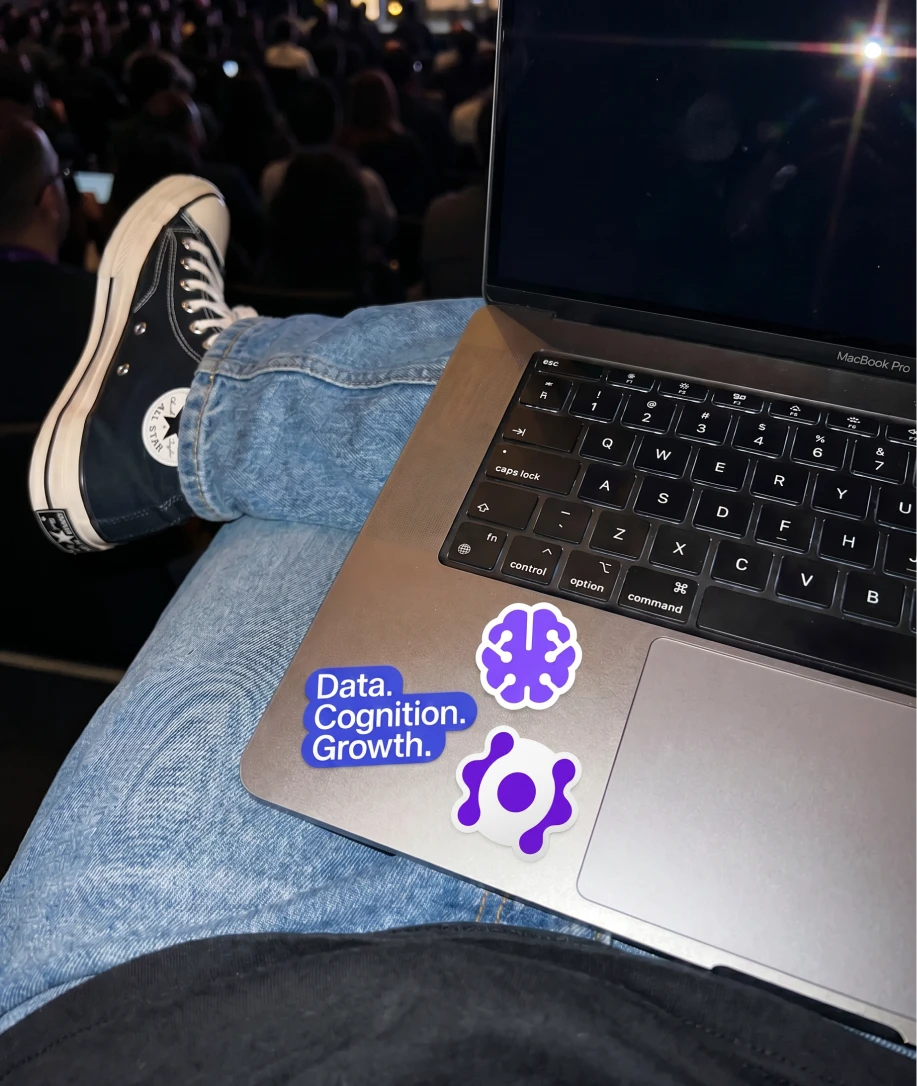
The brand system scaled across LinkedIn, App Store listings, conference materials, and investor decks - every touchpoint now reinforces the same architecture. We stayed on as design partners: bi-monthly photoshoots, ongoing social content, pitch deck updates, and brand execution across Abu Dhabi and international markets.
It depends on scope and ongoing execution needs. A brand architecture project with visual identity, comprehensive guidelines, and initial applications starts around €3,000 - €5,000. Ongoing retainer for execution (social media, events, photoshoots, pitch materials) runs separately. We provide detailed estimates after a discovery call to understand your structure and goals.
For a project like Xenios - where we built the parent-child structure, designed the visual system, created comprehensive guidelines, and handled initial applications - the core system took 6 - 8 weeks. Ongoing execution continues on retainer. Timeline depends on how many divisions need positioning, how much existing content needs updating, and feedback cycle speed.
It can, if done carelessly. We handle this by keeping recognizable elements (the "Xenios" name stayed), introducing changes gradually across touchpoints, and making sure the new system clarifies rather than replaces. When the architecture solves a real confusion problem-like prospects not knowing what you do - the rebrand strengthens recognition instead of hurting it.
If your products share a common foundation (same technology, same science, same team), a parent-child architecture builds credibility and makes cross-selling easier. If they're unrelated businesses, separate brands might make more sense. The test: does knowing about Product A make someone more likely to trust Product B? If yes, connect them. If no, keep them apart.
Sometimes a focused fix works, but it depends on what's causing the problem. If the issue is structural-like one brand doing too many jobs - a partial update usually just delays the full rebuild. We'll tell you honestly after discovery whether a scoped fix makes sense or whether you need the full architecture work.
Both. For Xenios, we built the strategic architecture (deciding to split into three entities, defining positioning for each), designed the visual system, and stayed on for execution. Brand strategy without execution doesn't ship. Visual design without strategy doesn't solve business problems. We do the full build and then keep executing as your design partner.
Updates from projects we're working on and lessons we're learning.
Sent when there's actually something to say.